Recycling and Sustainability — Gardeners Blackfriars
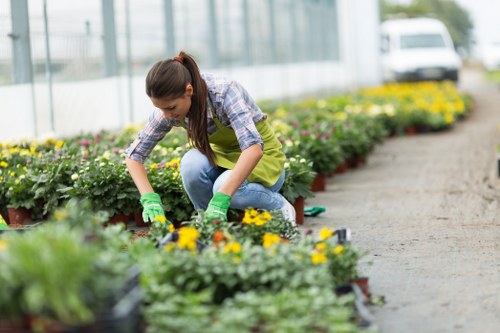 Gardeners Blackfriars takes a practical, place-based approach to creating an eco-friendly waste disposal area and a thriving sustainable rubbish gardening area for the community. Our programme blends everyday gardening waste management with broader borough-level recycling practices so that garden materials are reused, recycled or safely processed rather than sent to landfill. This page summarises our targets, local transfer stations we use, charity partnerships, and the low-carbon vehicles that keep our operations light on emissions.
We describe our strategy in clear steps: reduce waste at the source, segregate garden and household waste in line with the boroughs' separation schemes, and route materials through trusted local facilities. Our work with neighbours and local councils ensures that compostable green waste is collected separately from glass, paper and mixed recycling streams so it can be turned into mulch and soil conditioner rather than residual waste.
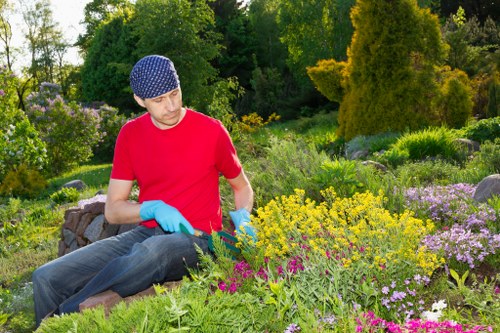 Operating an eco-conscious disposal hub on-site means designated bins and bays for different streams: green waste, wood, soil, inert materials and reusable items. The hub mirrors the boroughs approach to waste separation—food waste, garden waste, glass, paper/card and mixed recycling are kept distinct—so Gardeners in Blackfriars can integrate directly with municipal systems and local transfer stations rather than contaminating loads.
Our recycling percentage target is ambitious and measurable: we aim to divert at least 70% of all garden-site material away from landfill by 2030 through reuse, composting and appropriate recycling routes. To reach this, we monitor tonnages of green waste, timber, soil and salvageable items separately and adjust operations to improve capture rates and reduce contamination.
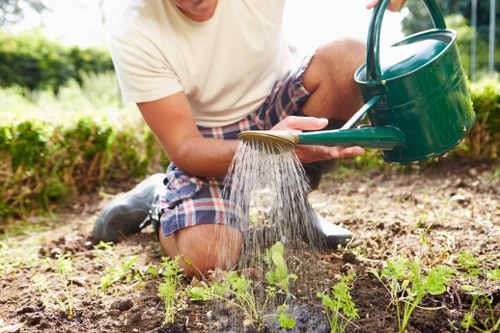 We rely on nearby transfer stations to move sorted materials efficiently. Typical routes include collection to borough transfer stations in the local area and onward delivery to specialist processors: green waste composting facilities, wood recycling depots, and inert material recyclers. Using local transfer stations reduces haul distances and supports the circular economy within the city.
Operational sustainability also means working with partners. We maintain formal partnerships with charities and reuse organisations that accept usable items salvaged from garden clearances. These include community reuse groups, local social enterprises that repair and repurpose garden furniture, and charities that redistribute tools and planters. Partnerships ensure that functional items get a second life rather than being treated as refuse.
To create a truly sustainable rubbish gardening area we apply simple on-site practices and a clear sorting hierarchy. Our sorting bays and signage follow a 'reduce, reuse, recycle' logic and are supported by staff training so contamination is minimised. Typical activities include:
- Composting and in-vessel processing for fines and food-impacted green waste;
- Turning wood waste into chipped mulch or biomass feedstock;
- Separating recyclable metals and plastics for collection at local transfer hubs;
- Recovering salvageable planters, stones and tools for charity reuse.
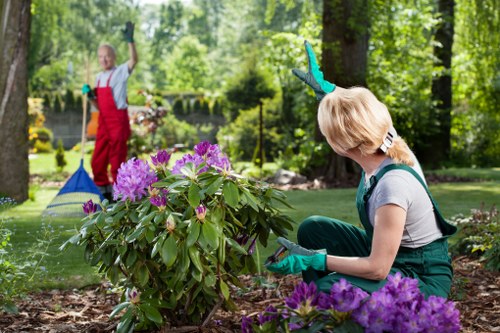 Transport choices are part of our carbon plan. Gardeners Blackfriars operates a fleet of low-carbon vans including electric vans for short urban runs and plug-in hybrids for longer trips. We prioritise deliveries and collections that reduce empty miles, consolidate loads to borough transfer stations, and use cargo bikes for small local pickups where feasible. These measures are designed to keep our carbon footprint low while maintaining efficient waste flows.
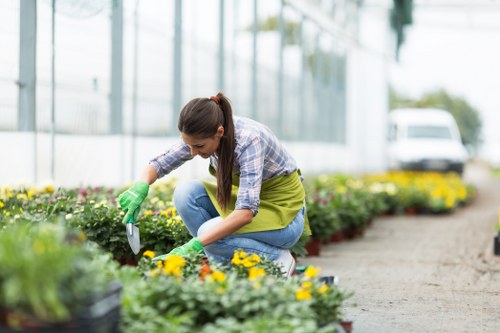 In addition to operational measures, we run seasonal campaigns to encourage neighbours to separate streams correctly. This works alongside borough guidance on food and garden waste separation and helps reduce contamination at source. By aligning our on-site separation with municipal rules—glass in separate containers, paper/card kept clean, food waste segregated—we make it straightforward for residents and commercial neighbours to participate in a common recycling approach.

