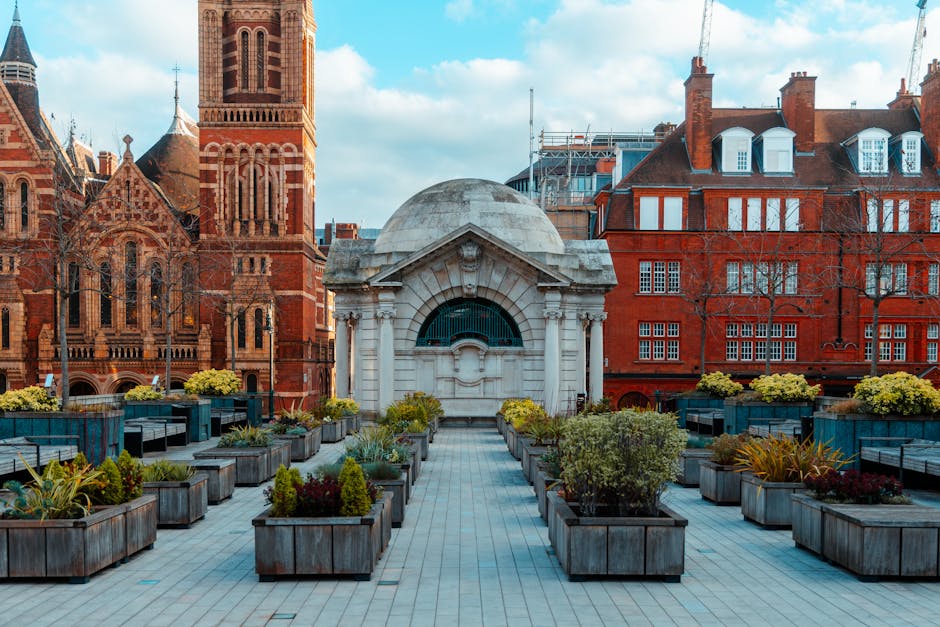
Gardeners for rooftop planters near Blackfriars Bridge: a practical guide to getting rooftop planting right
If you are looking for gardeners for rooftop planters near Blackfriars Bridge, you are probably trying to solve a very specific problem: how to make an exposed, compact, high-up space feel alive without turning it into a maintenance headache. Rooftop planting can be brilliant. It can also be a bit unforgiving. Wind, weight limits, drying soil, awkward access, and shade from surrounding buildings all shape what will work and what will quietly fail by week three.
This guide walks through the real-world side of rooftop planters in a central London setting. You will learn how professional gardeners approach the job, what matters most for plant health and safety, and how to plan a rooftop scheme that looks good in spring, still looks decent in August, and does not become a weekend burden. We will keep it practical. No fluff, no fantasy horticulture. Just the stuff that helps you make a good decision.
Why rooftop planter gardening matters near Blackfriars Bridge
Rooftop planters are not just decorative. In a dense part of London, they can soften hard surfaces, bring privacy, and make a terrace feel like a genuine outdoor room. Near Blackfriars Bridge, where buildings, river air, traffic movement, and varied light conditions all play a part, the right planting plan can change how you use the space day to day.
But here is the catch: rooftops are harsher than ground-level gardens. They tend to be windier, hotter in summer sun, colder in winter, and faster to dry out. That means a standard garden approach often falls short. A planter that looks fine in a sheltered courtyard can struggle badly on a roof. Soil compacts faster, watering needs are more demanding, and plant choices have to be tougher than most people expect.
That is why experienced gardeners matter. They do more than pop in a few plants and hope for the best. They assess exposure, drainage, planter depth, access, and ongoing care. If the rooftop sits above a flat roof membrane, a deck, or a communal terrace, then practical installation matters as much as plant selection. Truth be told, the wrong setup can cost more in replacements than the original planting ever did.
For many property owners, rooftop planters also need to serve a social purpose. Maybe the space is for staff breaks. Maybe it is a private terrace. Maybe it is just a patch of sky you would like to enjoy with a coffee and a bit of green. In those situations, planting needs to feel considered, not random. A good gardener understands that balance between looks and lived use.
If you are comparing broader support options, the service pages for garden services in Blackfriars and landscape gardening can help you think about the wider scope of work, not just the planters themselves.
How rooftop planter gardening works
The process usually starts with a site assessment. A gardener will want to know the orientation of the roof, how much wind it gets, whether there is full sun or patchy shade, what the planters are made from, and how easy it is to access water. On rooftops, these details matter much more than they would in an ordinary garden. A few metres one way or the other can change the microclimate completely.
Next comes the planter assessment. Are the containers deep enough for shrubs? Do they drain well? Are they heavy enough to stay put, but not so heavy that they cause concern? Are they sitting on a deck, paving, or roof covering that needs protection? These are the sort of questions an experienced gardener asks without making a drama of it. They are simply the basics.
Then comes plant selection. For rooftop planters, the best choices are usually plants that can cope with wind, intermittent drought, and occasional neglect, without looking tired all the time. Think structural grasses, compact evergreens, tough perennial flowers, herbs, and some small shrubs where space and depth allow. You can also mix in seasonal planting for colour, but only if someone will keep up with watering and feeding.
After planting, the job becomes maintenance. Rooftop planters are not a one-and-done feature. They need regular watering, deadheading, feeding, checking for pests, trimming, and occasional replanting. A decent maintenance rhythm keeps the display looking intentional rather than scruffy. If a roof garden is exposed, a small issue can snowball fast. One hot weekend and, suddenly, the soil has gone from damp to bone-dry. It happens.
Many people also combine planter work with other outdoor improvements. For example, some roofs benefit from decking services or light structural landscaping to make the space more usable and safer underfoot.
Key benefits and practical advantages
The clearest benefit is visual. Rooftop planters create shape, softness, and colour in a place that might otherwise feel sterile. A row of well-chosen containers can make a terrace feel calmer within a week. That is the easy bit. The practical benefits are where things get even more interesting.
- Better use of space: Planters let you garden where ground planting is impossible.
- More privacy: Tall planting can screen awkward views without building a solid wall.
- Improved atmosphere: Plants help soften the hard edges of rooftops, railings, and paving.
- Flexible design: You can change the look seasonally or gradually evolve the scheme.
- Lower disruption: Planter-based work is often less invasive than major ground landscaping.
- Targeted care: Problem areas can be managed individually rather than treating the whole space the same.
There is also a commercial value angle. For offices, hospitality venues, or managed residential buildings, attractive rooftop planting can make the space feel more premium and better maintained. That does not mean you need an extravagant design. A restrained scheme, well executed, often looks better than a crowded one. Less can be more. Honestly, that is one of the few gardening rules that rarely lets you down.
And because rooftop planters are modular, they allow staged improvement. You do not need to tackle the whole roof at once. You can start with the most exposed corner, see how it performs, then refine from there. That flexibility is very useful if budgets or access are tight.
Who this is for and when it makes sense
Rooftop planter gardening makes sense for anyone who wants strong visual impact without the complexity of a full rooftop garden build. It is especially useful for people who have a terrace, balcony, roof deck, or flat roof area that needs greenery but cannot support extensive planting beds.
Typical users include:
- homeowners with a private roof terrace
- landlords wanting to improve outdoor presentation
- managing agents maintaining communal spaces
- office and hospitality sites that need a better outdoor feel
- property owners looking for privacy screening or seasonal colour
It also makes sense if you want a professional to do the hard part: planning, planting, and keeping it alive. Let's face it, plenty of people love the idea of rooftop planters in April and then lose interest during a hot spell in July. No judgement. That is exactly why ongoing care matters.
If your roof gets strong wind, you have limited access to water, or the planters are tall and awkward, professional help becomes even more worthwhile. The same goes if the rooftop is part of a larger outdoor refresh and needs wider work such as regular garden maintenance, landscaping, or selective garden clearance.
Step-by-step guidance
If you are approaching rooftop planters for the first time, the easiest way to think about it is in stages. Rushing the design is how people end up with thirsty lavender in deep shade or oversized shrubs in flimsy containers. Not ideal.
- Assess the rooftop conditions. Check sunlight, wind exposure, access, drainage, and available water.
- Measure the space properly. Include walkway widths, door swings, and safe working areas.
- Review planter structure and weight. Make sure containers are suitable for the roof and can be moved or secured if needed.
- Choose a planting theme. Decide whether the scheme should be evergreen, seasonal, wildlife-friendly, low-maintenance, or a mix.
- Select plants for the microclimate. Use tougher species for exposed positions and reserve more delicate plants for shelter.
- Prepare the containers. Good drainage, appropriate compost, and a sensible mulch layer all help.
- Install irrigation or watering support. Even a simple routine matters on rooftops, especially in summer.
- Schedule maintenance from day one. Agree how often someone will check water, trim growth, and replace plants if needed.
One thing that is often overlooked: how the planting will look from different viewpoints. On a rooftop, people may see the scheme from inside the building, from the street, from neighbouring windows, or while standing only a metre away. A planter can look lush close up but oddly sparse from indoors. That is worth planning for.
If your scheme involves woody plants or taller screening species, you may also want to consider hedge trimming or, in some cases, tree lopping and removal where overgrown material is creating safety or access issues. On a roof, a little overgrowth can become a bigger problem than you expect.
Expert tips for better results
The best rooftop planter schemes are usually the ones with fewer moving parts. That may sound boring, but it is practical. A restrained palette of plants, repeated across several planters, often looks more elegant and is much easier to maintain than a mixed collection of one-off specimens.
Tip 1: choose wind-tolerant plants first, decorative plants second. If a plant cannot cope with movement in the air, it will never settle properly on a roof. The pot may look lovely for a month and then unravel quietly.
Tip 2: use depth strategically. Deep planters can support larger root systems and help with moisture retention. Shallow planters dry out rapidly. They are fine for some herbs and bedding plants, but not for much else.
Tip 3: group by watering need. This is a small detail that saves time. If thirsty plants are mixed with drought-tolerant ones, the whole scheme becomes awkward to care for.
Tip 4: think in layers. Combine taller forms, medium-height structure, and lower fillers. That gives you interest even when one plant finishes flowering.
Tip 5: include evergreen structure. Evergreen plants stop the space feeling bare in winter. A rooftop does not need to look abandoned in January, even when everything else is having a rest.
Tip 6: plan access before beauty. If the watering can cannot reach the back of a planter, someone will stop using it properly. Simple as that.
There is a pleasing side effect to getting this right: the space starts to feel calmer. Not Pinterest-perfect, just calm. And that is often the real goal.
Common mistakes to avoid
Some mistakes are obvious only after the damage has been done. Others are sneaky. Here are the main ones people make with rooftop planters near Blackfriars Bridge and similar central London settings.
- Ignoring wind exposure: Tall or flimsy plants can scorch, snap, or dry out quickly.
- Using the wrong compost or too little depth: Roots need space and moisture retention.
- Overfilling planters: Too many species in one container usually creates competition and patchy growth.
- Choosing plants for looks only: A plant may look great in a nursery and hate your rooftop.
- Forgetting irrigation: Summer heat on roofs can be intense, even on days that feel mild at street level.
- Neglecting drainage: Waterlogged roots are just as bad as dry roots.
- Skipping maintenance planning: A beautiful scheme can degrade fast without a routine.
Another quiet mistake is not thinking about seasonal change. A scheme that is all colour and no backbone can look empty when flowering ends. Good structure saves you there.
And yes, people do sometimes place planters wherever they happen to fit, then realise later that the watering route is awkward, the door is blocked, or the nicest view is hidden by a tall pot. Happens all the time. A little planning saves a lot of annoyance.
Tools, resources and recommendations
You do not need a warehouse of specialist kit to manage rooftop planters, but you do need the right basics. The best tools are the ones that make regular care easy enough that people actually do it.
| Item | Why it helps | Best use |
|---|---|---|
| Watering can or hose access | Keeps plants hydrated efficiently | Daily or weekly watering in warmer months |
| Quality compost | Supports root health and moisture balance | Filling and refreshing planters |
| Mulch | Reduces evaporation and surface drying | Top layer protection on exposed roofs |
| Secateurs | Helps with light pruning and deadheading | Routine tidy-ups |
| Plant supports | Stabilises taller plants in wind | Structural planting in exposed containers |
| Moisture meter | Gives a quick sense of soil conditions | Useful where watering needs are hard to judge |
For larger sites, service planning matters too. A good maintenance schedule might sit alongside lawn mowing where there is ground-level planting, or broader recycling and sustainability practices if old compost, waste packaging, or removed plant material needs responsible handling.
If you are unsure where to start, ask for a site visit and a clear scope. You want to know what will be planted, how often it will be maintained, and what happens if a plant fails. That last bit is important, because nature does not always read the brief.
Law, compliance, standards, or best practice
Rooftop planting is not usually about complex regulation in the way a structural build might be, but there are still sensible standards and responsibilities to keep in mind. In a London setting, roof access, safe working, load limits, drainage protection, and fire-aware planning may all be relevant depending on the building and the scope of work.
At a practical level, responsible gardeners should think about:
- safe access to the roof for installation and maintenance
- weight awareness when selecting planters, soil, water, and mature planting
- drainage protection so water does not pool in unwanted places
- manual handling where heavy planters or soil bags are involved
- good housekeeping so tools, hoses, and debris do not create trip hazards
- clear communication with building managers, residents, or facilities teams
Where work involves ladders, awkward access, or larger materials, it is wise to use a team that treats health and safety as standard rather than an afterthought. If you want to understand how a service provider approaches risk, it is reasonable to look for clear detail in an insurance and safety statement and a health and safety policy.
You may also want to review practical terms around service expectations through the terms and conditions and see how the business handles service enquiries via its pricing and quotes information. That is not bureaucracy for the sake of it. It is how you avoid confusion later.
Options, methods, or comparison table
There is no single right way to handle rooftop planters. The best approach depends on budget, maintenance tolerance, and how exposed the space is. Here is a straightforward comparison.
| Approach | Best for | Pros | Watch-outs |
|---|---|---|---|
| Low-maintenance evergreen scheme | Busy owners, managed buildings | Stable year-round look, lower upkeep | Can feel less colourful without seasonal accents |
| Mixed seasonal planting | Private terraces, hospitality spaces | More colour and variety | Needs more watering and replacement |
| Structural planters with shrubs and grasses | Privacy and form | Good screening, strong visual impact | Requires deeper containers and careful species choice |
| Herb and edible planters | Personal use, outdoor kitchens | Useful and enjoyable to pick from | Can struggle in wind and may need frequent watering |
| Flexible modular planting | Spaces that may change use over time | Easy to reconfigure | May look less settled if not designed carefully |
If the roof is also being refreshed with other features, it can make sense to combine planting with broader landscape gardening or even decking services so the whole terrace feels like one considered space rather than several unrelated fixes.
Case study or real-world example
Imagine a small rooftop terrace near Blackfriars Bridge used by a flat owner who wants privacy from neighbouring windows and a better place to sit in the evening. The space gets strong afternoon sun, then quite a bit of wind after 5pm. A few large planters already exist, but the planting has become patchy and dry by mid-summer.
A sensible response would not be to cram in lots of thirsty bedding plants. That would be nice for a few weeks, then disappointing. Instead, a gardener might recommend a mix of evergreen structure, hardy grasses, and a couple of seasonal highlights in the more sheltered containers. The taller planters could be used for screening, while lower pots add colour close to seating areas. The watering plan would matter just as much as the planting scheme itself.
Over the next season, the space would begin to feel more settled. Not perfect every day, because real gardens never are. But better. The owner would spend less time rescuing plants and more time actually using the terrace. That is the win. The garden becomes part of daily life, not a nagging project.
We have seen this sort of change often enough to say this with confidence: small rooftop spaces respond well to restraint, structure, and regular care. They do not need to shout to work beautifully.
Practical checklist
Use this checklist before starting or reviewing a rooftop planter project:
- Have you checked wind, sun, and shade conditions through the day?
- Do the planters have enough depth for the chosen plants?
- Is drainage working properly?
- Have you confirmed how watering will be done in hot weather?
- Are the plants suited to rooftop exposure, not just attractive in a nursery?
- Is there a maintenance routine for pruning, feeding, and replacement?
- Have you considered weight, access, and moving heavy materials safely?
- Does the design look good from inside the building as well as on the roof?
- Are there clear expectations around service frequency and ongoing care?
- Has waste and old planting been planned for responsibly?
If you can tick most of those boxes, you are already ahead of the game. If not, that is fine too. Better to spot the gaps before the first plant goes in.
Conclusion
Gardeners for rooftop planters near Blackfriars Bridge are not simply there to make things look pretty. They help turn a tricky exposed space into something practical, stable, and genuinely enjoyable to use. The difference is in the details: the right planter depth, the right planting mix, the right watering routine, and a clear sense of how the roof behaves through the seasons.
To be fair, rooftop planting is one of those jobs that looks simple until you start doing it properly. Then every decision matters a bit more. But that is also what makes it satisfying. Get it right and the space changes character. It becomes warmer, softer, and far more inviting, even on a grey London day with the wind moving across the bridge.
If you are planning a rooftop planter refresh or need reliable support for an existing scheme, take the time to speak with a team that understands both planting and the practical realities of roof-level work. A thoughtful approach now will save a lot of hassle later.
Get a free quote today and see how much you can save.
And if you want the honest version? A well-tended rooftop can make the whole building feel more human. That matters more than people often realise.
Frequently Asked Questions
What do gardeners for rooftop planters near Blackfriars Bridge actually do?
They assess rooftop conditions, choose plants that can handle exposure, install planters properly, and maintain the display so it stays healthy and attractive over time.
Which plants work best in rooftop planters?
Hardy, wind-tolerant, drought-resistant plants usually perform best. Grasses, evergreen structure, compact shrubs, herbs, and resilient perennials are common choices, depending on light and depth.
How often do rooftop planters need watering?
It depends on weather, planter size, plant type, and exposure. In warm or windy periods, some rooftop planters may need watering much more often than ground-level garden beds.
Are rooftop planters expensive to maintain?
They can be moderate or high maintenance depending on the planting style. A simple evergreen design usually costs less to look after than a highly seasonal scheme with frequent replacements.
Can rooftop planters help with privacy?
Yes. Taller planters with structured planting can soften views from neighbouring windows and make a terrace feel more secluded without building a solid screen.
What is the biggest mistake people make with rooftop planting?
The most common mistake is choosing plants for appearance alone and ignoring wind, heat, watering needs, and planter depth. Rooftops are much less forgiving than many people expect.
Do rooftop planters need special drainage?
They need reliable drainage to avoid root damage and water pooling. Good container setup and proper materials are essential, especially on roofs where excess moisture can create problems.
Can I mix edible plants with ornamental ones?
Yes, you can, but it is usually best to group plants with similar watering needs and light preferences. Otherwise, upkeep becomes awkward fast.
How do I know if my rooftop can support large planters?
You should get a proper assessment before adding heavy planters, soil, and water. Roof load considerations matter, especially for larger containers or mature planting.
Is rooftop planting suitable for shaded roofs near Blackfriars Bridge?
Yes, but the plant palette changes. Shade-tolerant species are needed, and watering, airflow, and drainage still matter. Shade does not automatically mean easy care, which annoyingly is a common assumption.
Should I choose seasonal colour or evergreen structure?
If you want year-round value, evergreen structure is usually the backbone. Seasonal colour can then be added on top. That combination tends to work better than colour alone.
How do I get started with a rooftop planter project?
Start with a site assessment, then decide on your goals: privacy, colour, low maintenance, or a mix. From there, plan the planter sizes, plant selection, and maintenance schedule before anything is installed.